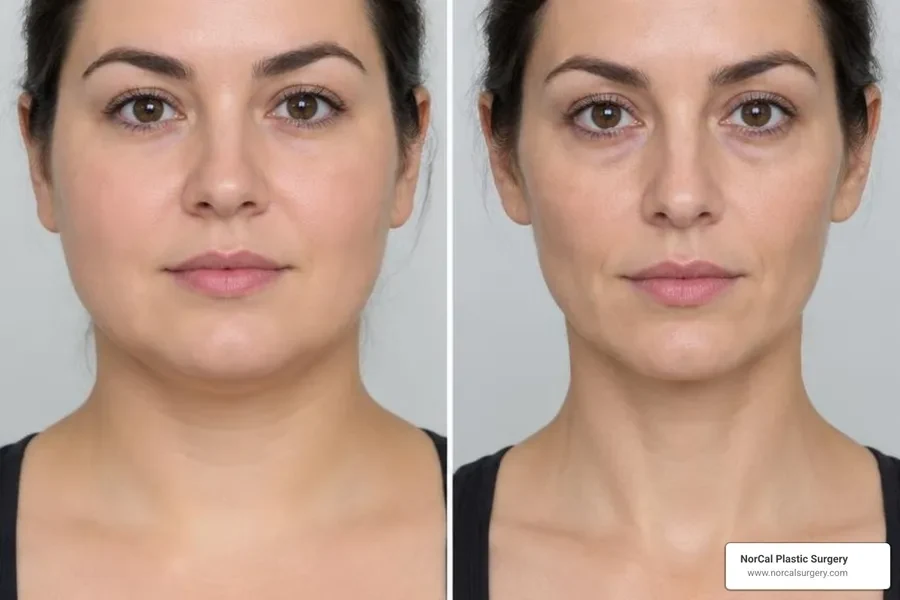
Ozempic face before and after pictures can show a noticeable change in facial fullness after substantial weight loss. The same weight loss that reshapes the body may leave some people with a more hollow, tired, or aged appearance in the face. If you are comparing photos and wondering what may be changing, here is a practical overview:
What you may see in Ozempic face before and after photos:
| Area | Before | After |
|---|---|---|
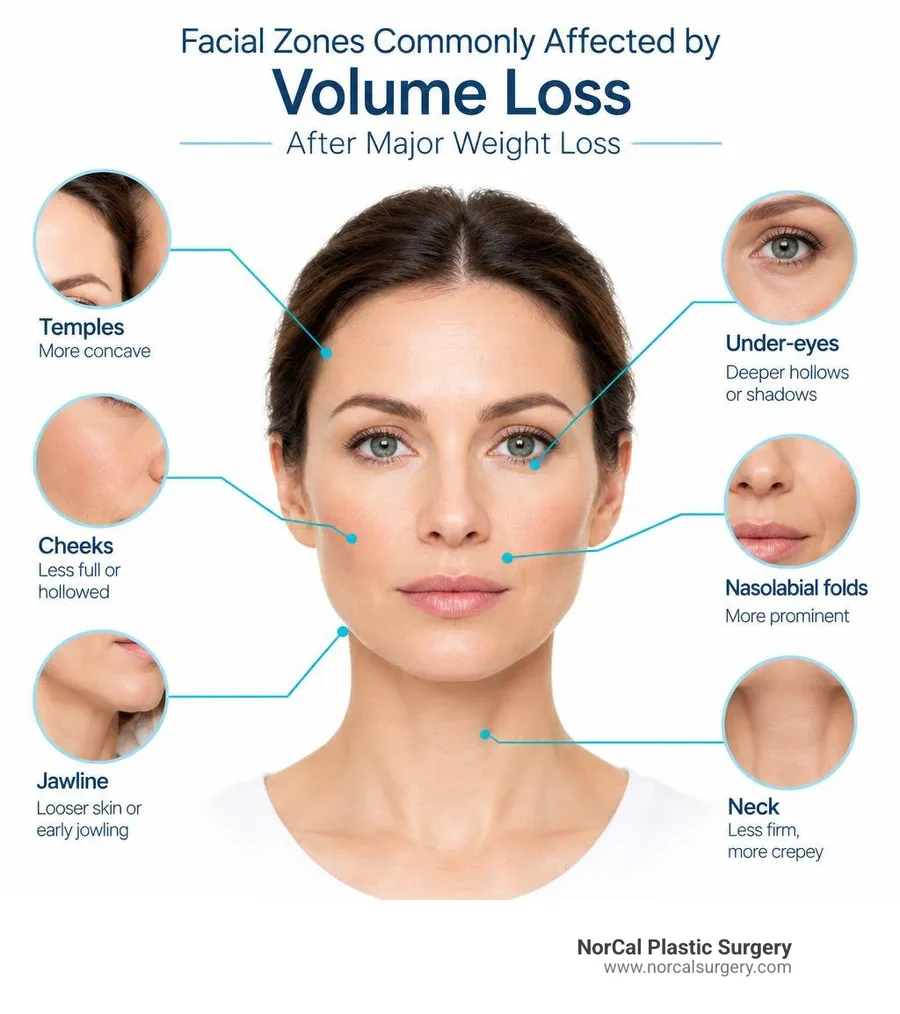
| Cheeks | Full, rounded | Less full or hollowed |
| Temples | Smooth, filled | More concave |
| Under-eyes | Supported | Deeper hollows or shadows |
| Jawline | Defined by soft tissue | Loose skin or early jowling |
| Nasolabial folds | Subtle | More prominent |
Significant weight loss can reduce the facial fat pads beneath the skin. Because the face contains several small, distinct fat compartments, a change in overall body weight can be especially visible in the cheeks, temples, and under-eye area.
GLP-1 medications, including Ozempic (semaglutide) and Mounjaro (tirzepatide), can support meaningful weight loss for some patients. The pace and total amount of weight loss, along with age, genetics, skin quality, and baseline facial volume, all affect how visible facial changes may become.
The result can be a face that looks less rested or less familiar, even when a person is feeling healthier after weight loss.
I'm Dr. Timothy Rankin, a board-certified plastic surgeon and Fellow of the American College of Surgeons specializing in facial rejuvenation surgery at NorCal Plastic Surgery, serving patients in Walnut Creek, Tiburon, and across the SF Bay Area. My training at Vanderbilt University and work with leading facial aesthetic surgeons give me a hands-on perspective on what ozempic face before and after pictures may reveal and, more importantly, what can be done about it. Read on for a breakdown of the visible changes, what may drive them, and the options available.
What is "Ozempic Face" and Why Does It Happen?
The term Ozempic face is a colloquialism popularized on social media, but the underlying anatomy is very real. When we prescribe or monitor patients on GLP-1 receptor agonists like semaglutide (Ozempic, Wegovy) or tirzepatide (Mounjaro, Zepbound), the primary goal is systemic fat loss. Unfortunately, our bodies do not let us choose where we lose that fat first.
Our faces rely on a complex network of deep and superficial fat pads to support the skin, create smooth contours, and project a youthful, rested appearance. When weight loss occurs rapidly, these localized fat compartments shrink at an accelerated rate.
Furthermore, research indicates that GLP-1 receptors actually exist within skin cells. This suggests there may be a direct pharmacological effect on the skin's support structures, potentially compounding the rapid volume depletion.
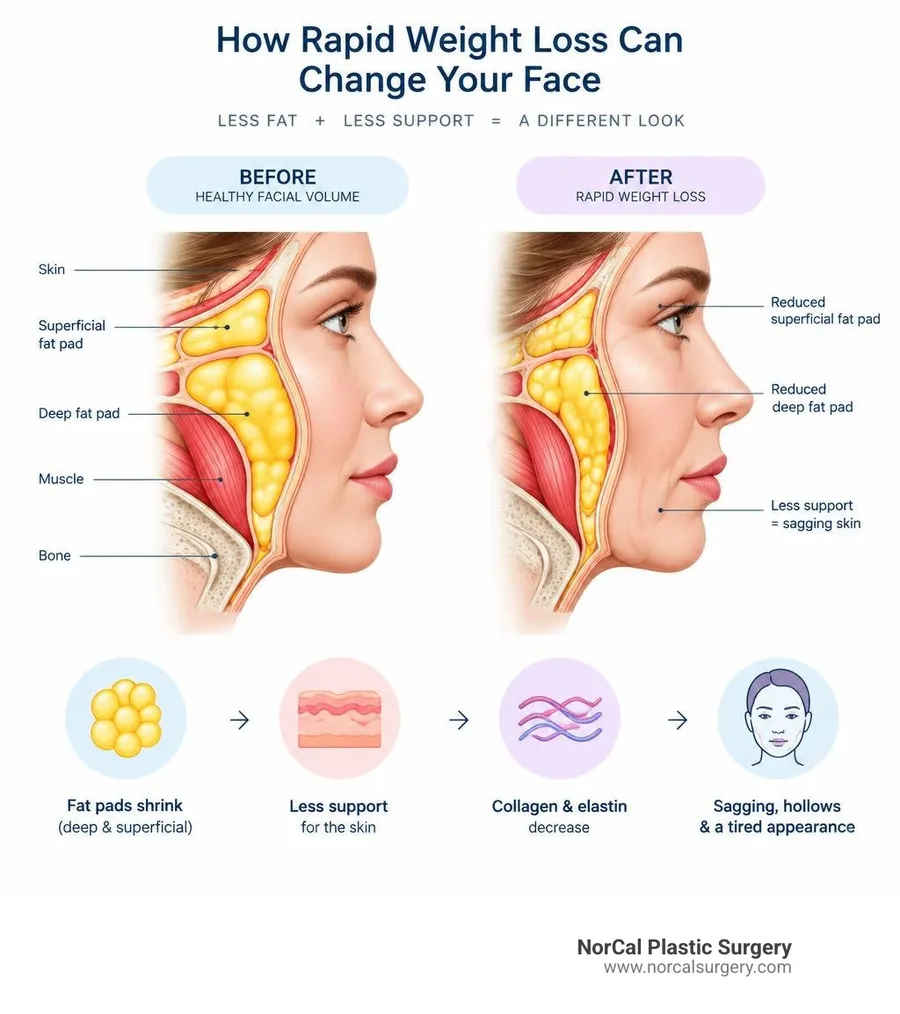
As fat pads in the cheeks, temples, and under-eye areas deflate, the skin loses its underlying structural support. This process leads to collagen depletion and a loss of elastin, the protein that allows skin to snap back into place. When the volume underneath disappears faster than the skin can contract, the result is structural sagging, hollows, and a tired appearance. For a deeper look at the biology of these changes, you can read this scientific explanation of GLP-1 skin changes.
Analyzing Ozempic Face Before and After Pictures: Common Visible Changes
When we analyze patient photos in our Walnut Creek and Tiburon offices, we look at specific anatomical zones. The most common changes visible in ozempic face before and after pictures may include:
- Hollow Temples: Loss of temporal volume can create a more skeletal, hourglass shape in the upper face.
- Sunken Cheeks: Reduced malar and submalar volume may lessen cheek fullness and allow the skin to drape downward.
- Deepening Nasolabial Folds: As cheek support decreases, the folds around the mouth can become more noticeable.
- Jowls and Loose Jawline Skin: Reduced midface support can contribute to skin gathering along the jawline.
- Periorbital Hollowing: Reduced cushioning around the eyes can make hollows and shadows more visible.
Facial changes do not follow an identical pattern for everyone. A useful way to think about them is by degree of weight loss and the amount of remaining skin elasticity:
| Phase of Weight Loss | Typical Facial Changes |
|---|---|
| Early changes | Subtle midface thinning and a slight reduction in cheek fullness. The face may simply appear slimmer. |
| More noticeable changes | Greater cheek or temple hollowing, more visible folds around the mouth, and mild laxity. |
| Advanced changes | Marked volume depletion, prominent folds, jowling, and loose skin that may not improve fully with time. |
What Celebrity Ozempic Face Before and After Pictures Show
Celebrity comparison photos often drive conversations about rapid cosmetic changes, but they have important limitations. Differences in lighting, makeup, facial expression, camera angle, styling, and photo editing can make a person appear dramatically different. A photograph alone cannot confirm a medication, a treatment history, or the cause of facial changes.
Public discussions of weight loss can still illustrate a broader point: people may feel conflicted when a positive health change is accompanied by an appearance they do not recognize. A consultation should focus on the individual patient's goals, anatomy, rate of weight change, and overall health rather than on a celebrity comparison.
How Weight Loss Velocity Affects Ozempic Face Before and After Pictures
The pace of weight loss can influence how much facial volume loss and skin laxity a person notices. With more gradual weight loss, the skin may have more time to adapt to changing volume underneath.
With GLP-1 medications, some patients lose weight quickly. Skin contraction can take time after body weight stabilizes, and the degree of improvement varies from person to person.
Age is another important factor. Adults with lower baseline collagen and skin elasticity may notice more pronounced sagging or wrinkling after significant facial volume loss than younger patients.
How to Prevent and Treat Facial Volume Loss from GLP-1s
While facial changes are a natural consequence of significant weight loss, you can take proactive steps to minimize their impact. The most effective prevention strategy is to prioritize a gradual rate of weight loss, aiming for one to two pounds per week. This can be managed by working closely with your prescribing doctor to adjust your medication titration schedule.
To support your skin's structural integrity from the inside out, consider these foundational lifestyle habits:
- Protein Intake: Aim for 1.6 to 2.2 grams of protein per kilogram of ideal body weight daily to preserve lean muscle mass and support collagen synthesis.
- Hydration: Drink plenty of water daily to maintain skin hydration and volume.
- Daily Sunscreen: Apply a broad-spectrum SPF 30+ sunscreen daily to protect existing collagen from UV damage, which accelerates aging.
- Retinoids: Incorporate topical retinoids or prescription tretinoin into your evening skincare routine to stimulate dermal thickening and collagen production.
For additional clinical strategies on managing these changes, explore these comprehensive Prevention and treatment guidelines.
Non-Surgical Treatments for Restoring Facial Volume
If you are already experiencing noticeable facial hollowing but are not ready for surgery, several excellent non-surgical options can help restore a youthful, natural contour:
- Hyaluronic Acid Dermal Fillers: These injectables provide immediate volume restoration to targeted areas like the cheeks, temples, and under-eye hollows.
- Sculptra (Poly-L-Lactic Acid): Rather than just filling a space, Sculptra acts as a biostimulator, prompting your body to produce its own natural collagen over several months for a gradual, subtle improvement.
- Radiofrequency (RF) Skin Tightening: Treatments like RF microneedling deliver heat energy into the deeper layers of the skin, causing existing collagen fibers to contract and stimulating new collagen production to address mild skin laxity.
- Microneedling with PRP (Platelet-Rich Plasma): This treatment uses growth factors from your own blood to enhance skin texture, elasticity, and overall radiance.
To learn more about how these minimally invasive options can refresh your appearance, read More info about injectable treatments.
Surgical Solutions for Advanced Skin Laxity
For patients with advanced skin laxity, deep wrinkles, and severe structural sagging, non-surgical treatments may only offer temporary or incomplete improvement. In these cases, surgical facial rejuvenation provides the most natural, long-lasting results.
One highly effective option is autologous fat transfer, sometimes colloquially referred to as a face BBL. This procedure involves harvesting a small amount of fat from another area of your body, processing it into highly refined micro-particles, and strategically injecting it back into the hollow areas of your face.
When significant skin sagging exists along the jawline and neck, a surgical lift is often the gold standard:
- Deep Plane Facelift: This advanced technique lifts the deeper muscle layers of the face rather than just pulling the skin, preventing a tight, unnatural look and restoring a youthful, soft contour to the midface and jawline.
- Neck Lift: Addresses the loose skin and muscle banding beneath the chin, restoring a sharp, defined neck profile.
For a detailed look at how these procedures can restore your natural contours, read More info about facial surgery.
Frequently Asked Questions About Ozempic Face
Is Ozempic face permanent or will it go away on its own?
In some cases, the face may show gradual improvement once weight stabilizes. Skin remodeling is slow and may continue for many months after weight loss stops. During this period, the skin can contract to a degree and collagen remodeling may soften some hollows. However, people with substantial weight loss, lower skin elasticity, or significant loss of deep facial volume may need cosmetic treatment if they want more noticeable restoration.
Are there other body areas that experience similar volume loss?
Yes, rapid weight loss from GLP-1 medications can affect fat distribution throughout the body. Some patients notice flattening or laxity in the buttocks, upper arms, thighs, and abdomen.
In a mommy makeover context, patients sometimes seek to address changes in several areas. A non-surgical mommy makeover is not a defined medical service or a single stand-alone procedure. It is shorthand for a customized combination of non-surgical body contouring, skin tightening, injectables, medspa, or wellness treatments tailored to individual goals, and it is not equivalent to a surgical mommy makeover.
Is Ozempic face a medical health risk?
Ozempic face is generally used to describe a cosmetic concern rather than a diagnosis or a direct medical health risk. Still, the emotional effect can be meaningful. Reaching a health or weight goal while feeling that your reflection looks tired, aged, or unfamiliar can affect confidence and self-recognition.
Conclusion
At NorCal Plastic Surgery, we believe that achieving your health and weight loss goals should not require sacrificing your confidence. Dr. Timothy Rankin and our experienced team create personalized facial rejuvenation plans designed to restore natural, enduring results for patients across the SF Bay Area. Whether you are interested in subtle, non-surgical volume restoration or a comprehensive surgical lift at our fully accredited Tiburon surgical facility or Walnut Creek surgical center, we are here to help you look as vibrant as you feel.
Ready to discuss your personalized treatment plan? Schedule a consultation with NorCal Plastic Surgery today.