
A male abdominoplasty is designed to restore structural definition to the midsection while respecting the masculine frame. When evaluating surgical body contouring options, men often have different anatomical goals than women. The procedure can address loose lower-abdominal skin, repair weakened or separated abdominal muscles when appropriate, and refine the waistline to support a broader, athletic-looking torso.
A consultation should distinguish between subcutaneous fat and visceral fat. Subcutaneous fat sits beneath the skin and above the abdominal muscles, so it may be addressed with surgical excision or liposuction when appropriate. Visceral fat is inside the abdominal cavity around the organs and cannot be removed with a tummy tuck. The best candidates are generally at a healthy, stable weight with habits they can maintain after surgery.
Your surgeon will assess skin quality, the degree of muscle laxity, remaining fat deposits, and the incision placement needed for your goals. Results vary by anatomy and procedure plan, but the aim is a smoother, firmer abdominal contour that still looks natural for your frame.
How to Review Male Tummy Tuck Before and After Photos
Before-and-after photos can help you understand the kinds of changes a tummy tuck may achieve, but use photos from the practice performing your consultation. Look for patients with a body type, amount of skin laxity, and starting point similar to your own.
Pay attention to the abdominal contour, waistline, skin quality, and low placement of the scar. In male abdominoplasty, the incision is typically planned low on the pelvic area so it can usually be concealed by standard underwear, athletic shorts, or swim trunks. Your surgeon can explain how your scar placement and healing timeline may differ from another patient's.
Male Tummy Tuck After Significant Weight Loss
Men who have lost a substantial amount of weight through lifestyle changes or bariatric surgery may be left with loose, hanging abdominal skin. A standard tummy tuck focuses on the front of the abdomen, while more extensive laxity may call for an extended tummy tuck, panniculectomy, or lower body lift.
Removing excess skin can improve comfort, reduce rubbing in skin folds, and make clothing fit more comfortably. During your consultation, your surgeon can recommend the option that best matches the amount and location of loose tissue.
Combining Abdominoplasty with Gynecomastia Surgery and Liposuction
A tummy tuck does not always need to be performed alone. Some men choose to address multiple areas during one surgical plan through comprehensive surgical solutions.
Combining procedures may include:
- Gynecomastia surgery: Treating excess chest tissue can create better balance between the chest and a flatter abdomen.
- Flank liposuction: Refining the love-handle area can improve the transition between the torso and waist.
- Abdominal etching: For appropriate candidates, high-definition liposculpting can define natural abdominal contours for a subtle, athletic appearance.
A personalized plan helps create balanced results across the torso while allowing you to complete recovery within one coordinated healing period.
Key Surgical Differences Between Male and Female Abdominoplasty
The aesthetic objectives for male and female abdomens differ substantially. While female abdominoplasty frequently emphasizes an inward curve at the waist to accentuate an hourglass silhouette, male surgery is designed to produce a classic V-shaped torso with straight, strong lateral borders.
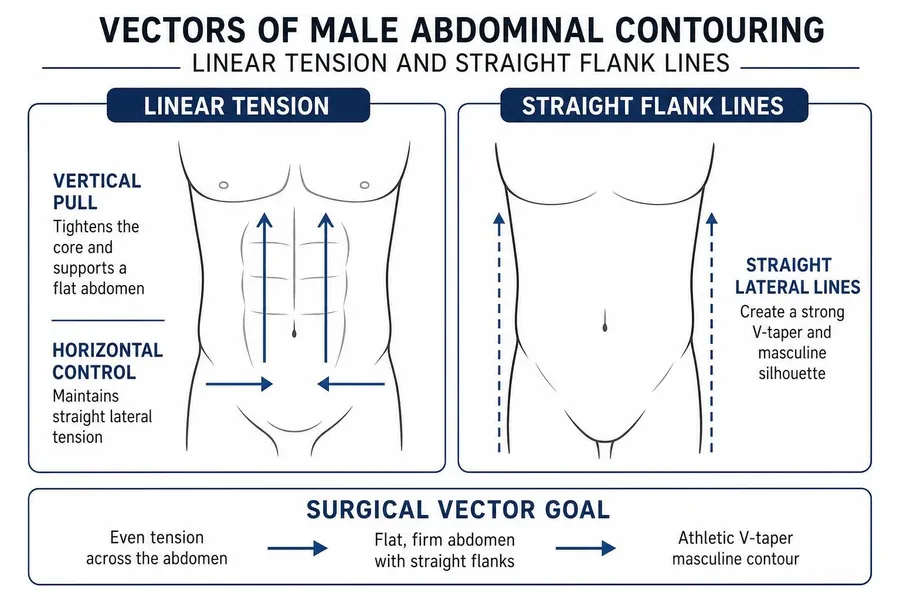
To preserve masculinity, the surgical vector of pull is adjusted to avoid excessive narrowing of the waist. Furthermore, the belly button must be shaped with care. A masculine navel tends to be slightly larger, vertically oriented, or hooded, positioned naturally along the midline without exaggerated female rounding.
| Surgical Feature | Male Abdominoplasty | Female Abdominoplasty |
|---|---|---|
| Torso Goal | V-taper with strong, straight flanks | Hourglass curve with narrow waist |
| Incision Line | Straight, low pelvic line hidden by briefs | Curved line along high-cut bikini borders |
| Navel Shape | Slightly deeper, vertically oriented hood | Smaller, delicate oval or round opening |
| Liposuction Focus | Flanks, love handles, and chest transitions | Waist cinching and lower back tapering |
| Tissue Thickness | Thicker dermal layer and denser fascia | Thinner dermis with higher natural flexibility |
Recovery Protocols, Timelines, and Maximizing Long-Term Results
Navigating your recovery smoothly requires patience, proper physical support, and dedicated aftercare. Immediately following your operation, you will wear a medical-grade compression garment. This garment provides gentle, constant pressure across the abdominal wall to minimize fluid accumulation, support the internal repair sutures, and encourage the skin to adhere smoothly to underlying tissues.
To help optimize your healing, exploring our guidance on post-operative wellness and recovery will keep you fully informed about nutrition, hydration, and safe physical rehabilitation. Over the first few months, acute swelling gradually resolves, and your surgical scar begins its natural process of softening and fading.
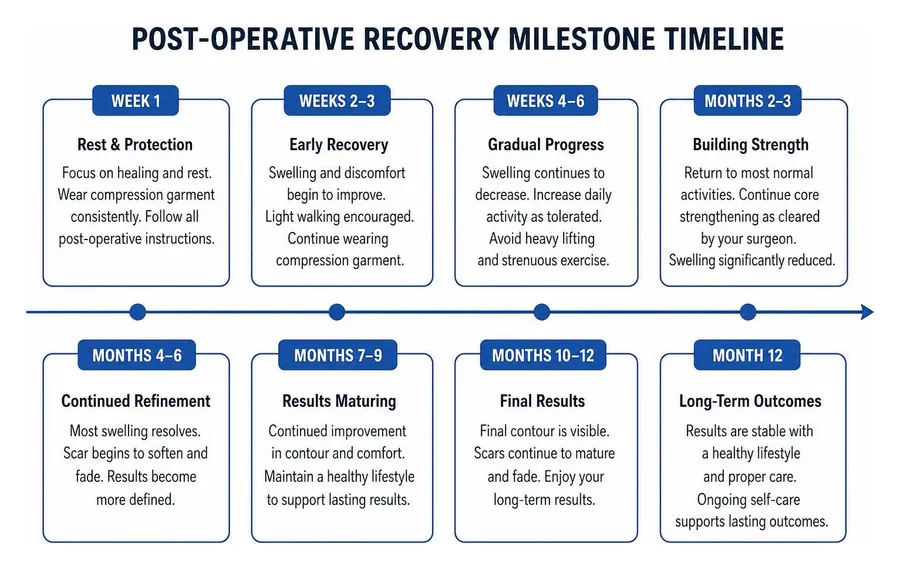
Pre-Operative Preparation and Post-Surgical Milestones
Preparing your body ahead of time sets the foundation for a predictable, safe recovery. Two weeks prior to surgery, patients must stop taking aspirin, non-steroidal anti-inflammatory medications, high-dose vitamin E, and herbal supplements that can thin the blood. Smoking and all nicotine products must be completely stopped well in advance, as nicotine restricts small blood vessels and impairs tissue healing.
Follow these primary guidelines as you progress through each post-operative milestone:
- Week 1: Prioritize resting at home in a slightly flexed position at the hips to minimize tension on the incision. Take brief, assisted walks around your living room every few hours to promote circulation.
- Weeks 2 to 3: Light daily activities and remote desk work can generally resume. Continue wearing your compression garment consistently as directed.
- Weeks 4 to 6: Swelling continues to decrease noticeably. You may transition to light cardiovascular exercise, such as brisk walking or stationary cycling, while avoiding heavy core strain.
- Weeks 6 to 8: Surgical clearance is typically granted for moderate gym workouts, weight lifting, and standard physical labor. Always ease back into core-specific exercises gradually.
Frequently Asked Questions About Male Abdominoplasty
Who is the ideal candidate for a male tummy tuck?
The ideal candidate is a healthy non-smoker who is close to his target body weight and has maintained weight stability for several months. Candidates should have loose skin or abdominal muscle laxity that does not respond to exercise, along with minimal internal visceral fat. Realistic aesthetic goals and a commitment to following post-operative activity restrictions are essential for achieving the best possible outcome.
How long until final male tummy tuck results appear?
While you will notice an immediate improvement in abdominal contour as soon as your initial dressings are removed, your final aesthetic result will take six to twelve months to fully settle. Residual swelling in the lower abdomen takes several months to completely disperse. The surgical incision line will continue to mature, flatten, and fade over the course of an entire year.
What are the main risks associated with male abdominoplasty?
As with any major surgical procedure, male abdominoplasty carries potential risks that every patient should understand. These can include localized fluid collections under the skin known as seromas, small blood collections called hematomas, delayed wound healing along the incision line, temporary skin numbness, or minor infection. Choosing an experienced, board-certified plastic surgeon working in a fully accredited facility significantly reduces surgical risks through meticulous technique, sterile operating protocols, and close follow-up care.
Conclusion
A male tummy tuck offers a reliable way to resolve excess skin, repair weakened core muscles, and achieve a defined midsection that reflects your hard work. At NorCal Plastic Surgery, with accredited surgical facilities and convenient locations in the SF Bay Area, including Tiburon and Walnut Creek, we tailor every procedure to respect your masculine anatomy and lifestyle goals. If you are ready to take the next step toward restoring your abdominal contour, schedule a consultation for male body contouring with me, Dr. Timothy Rankin, and let us design a personalized surgical plan for you.