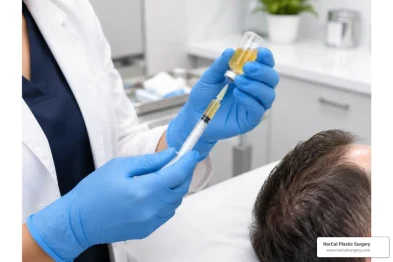
PRP hair injections can help some people with early hair thinning, especially when hair follicles are still active. PRP uses a small sample of your own blood. The platelet-rich portion is prepared and injected into areas of thinning to support healthier-looking, fuller hair over time.
Research suggests PRP may improve hair density and reduce shedding for some people with pattern hair loss. Results are not guaranteed, and PRP cannot bring back follicles in areas that are completely bald or scarred. It is best viewed as a treatment that may support existing hair when it fits the cause and stage of thinning.
Most treatment plans start with a short series of appointments, then include maintenance visits to help preserve results. A consultation is important because hair loss can have many causes, including genetics, hormonal changes, illness, stress, and nutritional concerns.
Dr. Timothy Rankin is a board-certified plastic surgeon and Fellow of the American College of Surgeons serving the Bay Area. At NorCal Plastic Surgery, every hair restoration plan begins with a careful evaluation and realistic conversation about what treatment may achieve.
The Science Behind PRP Hair Injections and Follicle Stimulation
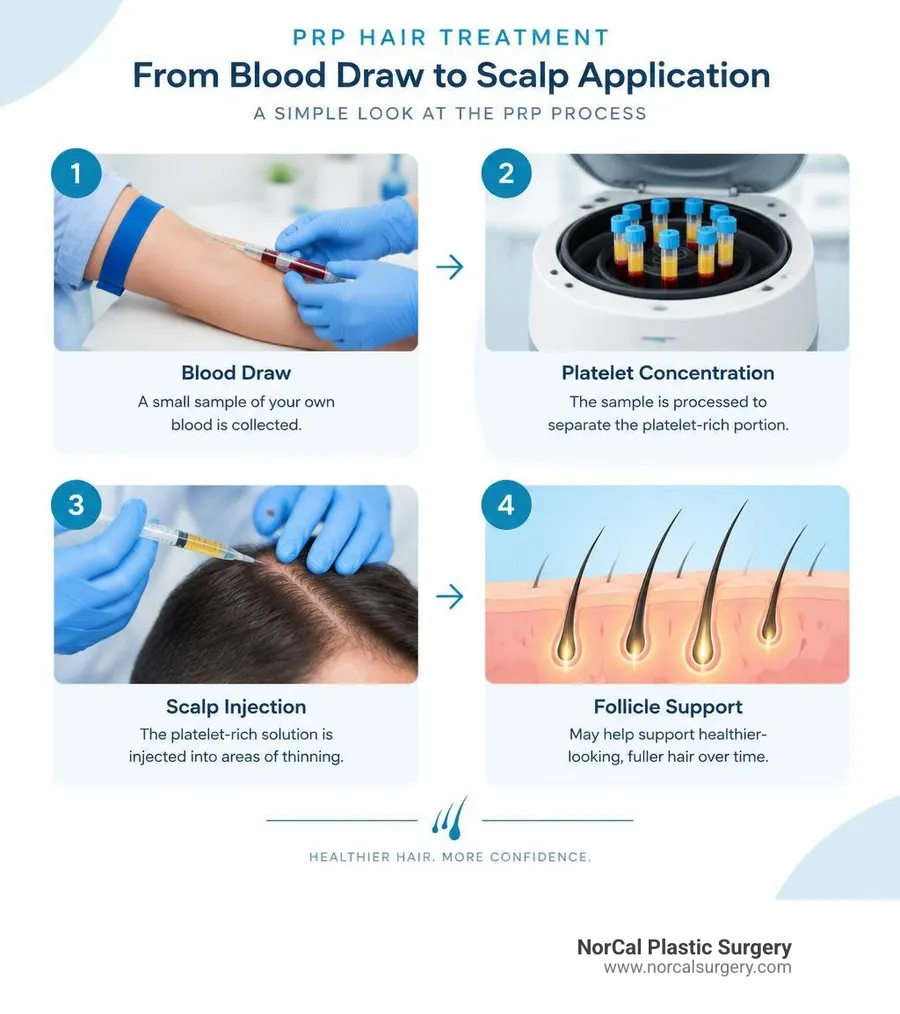
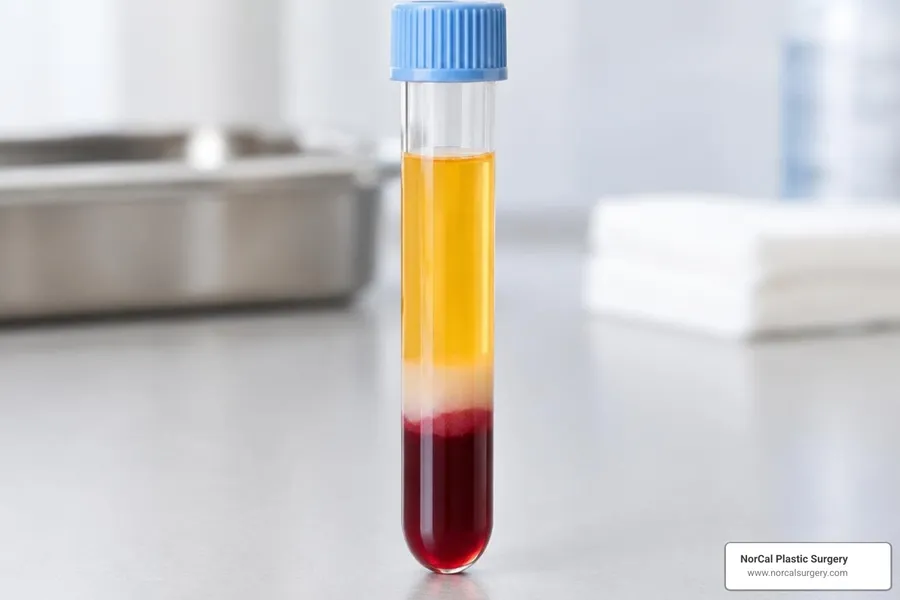
PRP stands for platelet-rich plasma. Platelets are natural components of blood that carry signals involved in the body's healing response. For a PRP hair treatment, a clinician draws a small amount of blood and places it in a centrifuge. The process separates the platelet-rich portion from the rest of the sample.
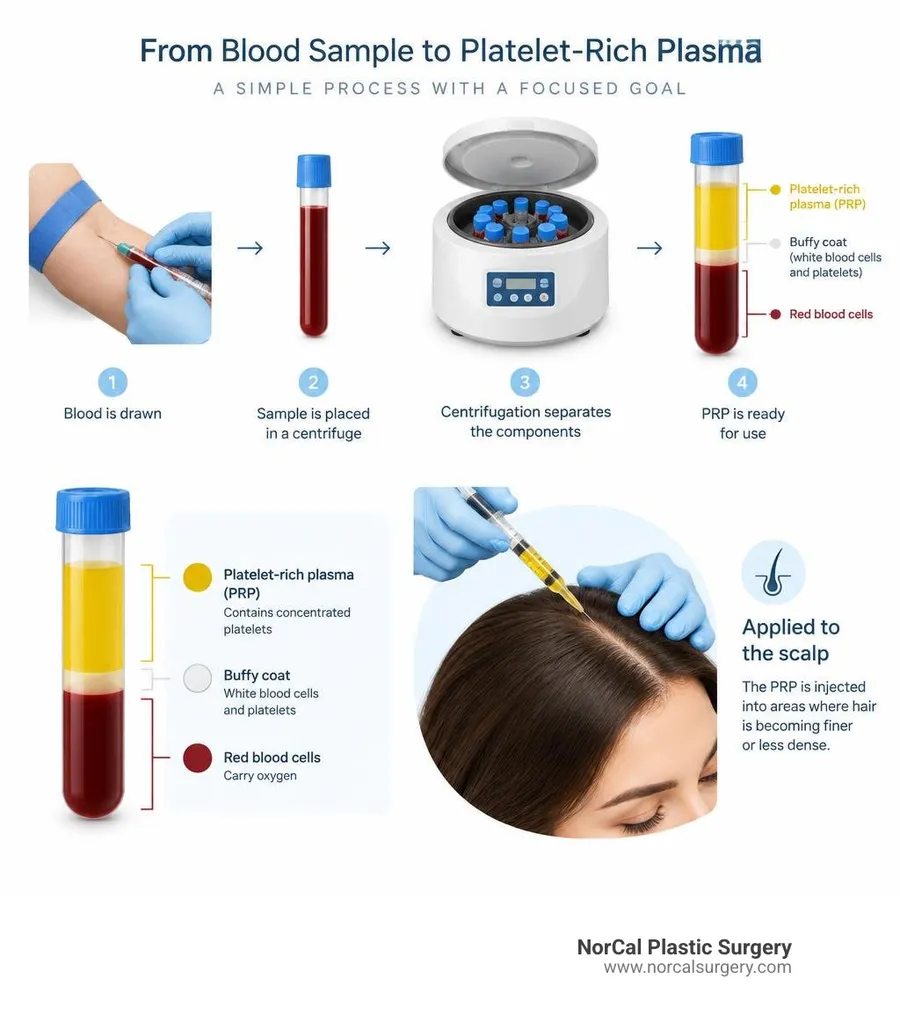
The prepared PRP is then placed into areas of the scalp where hair is becoming finer or less dense. The goal is to support existing follicles, not to create entirely new follicles. The International Society of Hair Restoration Surgery provides a helpful overview of how PRP is used in hair restoration.
What PRP May Do for Existing Hair Follicles
Hair grows in repeating phases. With pattern hair loss, follicles may gradually produce finer, shorter hairs over time. PRP is intended to support follicles that are still present and functioning.
Patients may notice less shedding before they notice a visible change in fullness. Any improvement develops gradually because hair grows slowly. PRP is not a replacement for a medical evaluation when hair loss is sudden, patchy, or accompanied by scalp irritation.
Why Results Vary From Person to Person
PRP is made from your own blood, so the preparation and the response can differ from one person to another. Your pattern of hair loss, overall health, scalp condition, treatment schedule, and other therapies can all influence the result.
This is why a consultation should focus on candidacy rather than promises. A clinician can examine the scalp, discuss your goals, and recommend whether PRP is a sensible option on its own or as part of a broader hair restoration plan.
Clinical Evidence, Hair Density Metrics, and Success Rates
Clinical studies of PRP for androgenetic alopecia, also called pattern hair loss, have shown encouraging results. In many studies, PRP-treated areas had better hair density or thicker-looking hair than comparison areas. However, treatment methods and follow-up schedules vary, which makes it difficult to predict an identical outcome for every patient.
A randomized controlled study published through the National Library of Medicine found that PRP improved hair density and certain measures of follicle activity in people with pattern hair loss. You can read the study summary here.
What Doctors Measure in PRP Hair Studies
Researchers often look at changes in hair density, hair shaft thickness, shedding, scalp coverage, and patient satisfaction. These measures help show whether existing follicles are producing stronger visible hairs over time.
For patients, the most meaningful signs are often practical: less hair in the shower or brush, improved coverage in photos, and hair that feels fuller when styled. Before-and-after photographs taken in consistent lighting can be more useful than checking progress day to day.
What Results Are Realistic?
PRP tends to be most helpful for people with early to moderate thinning, particularly around the crown or through a widening part. It may be less effective in areas with long-standing, complete hair loss.
A thoughtful provider will explain that PRP is a gradual treatment. Some patients see a noticeable change, while others see more modest support for existing hair. Regular follow-up helps determine whether continuing treatment is worthwhile for you.
Candidacy, Protocols, and What to Expect
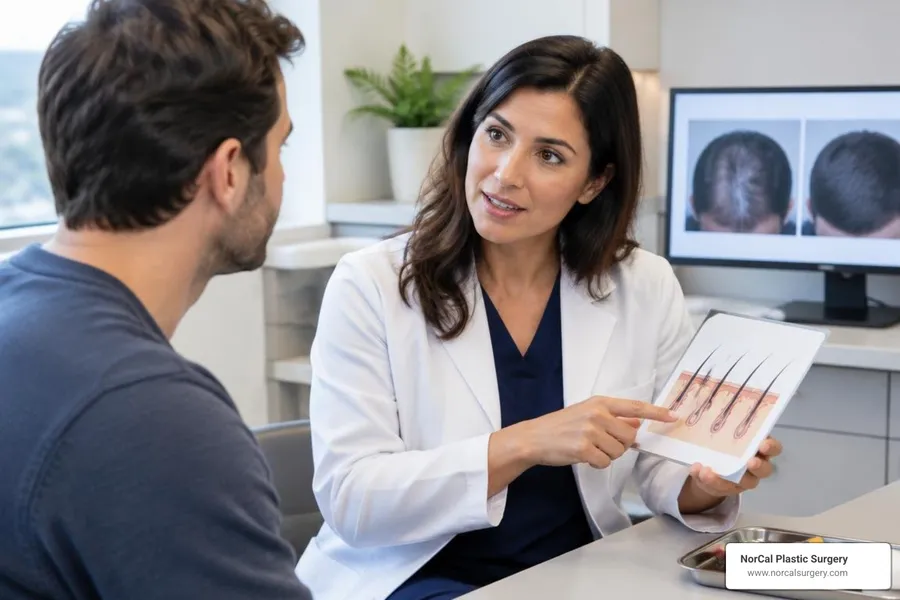
PRP is not the right answer for every type of hair loss. The best candidates usually have thinning hair and active follicles, rather than smooth areas with no visible hair growth. A scalp evaluation can help identify whether PRP may be useful.
People often consider PRP for early pattern hair loss, diffuse thinning, or increased shedding after a temporary trigger. A clinician may recommend additional evaluation before treatment when hair loss is sudden, patchy, or linked to a medical concern.
The Step-by-Step Procedure for PRP Hair Injections
A PRP appointment is typically completed in one office visit. The general process includes:
- Consultation and scalp assessment: Your provider reviews your concerns, treatment history, and the areas of thinning.
- Blood draw: A small sample of blood is collected from your arm.
- PRP preparation: The sample is processed to separate the platelet-rich plasma.
- Scalp treatment: The clinician places PRP into the planned treatment areas using small injections.
- Aftercare guidance: You receive individualized instructions for scalp care, exercise, and medications after treatment.
Recommended Treatment Schedule
Many practices begin with a series of treatments spaced several weeks apart, followed by maintenance visits based on your response and goals. Your provider may adjust the schedule based on your scalp evaluation and progress.
It is helpful to plan for gradual progress. Standardized photos at follow-up visits can show changes in density and coverage more clearly than daily mirror checks.
How PRP Hair Injections Fit Into a Hair Restoration Plan
PRP hair injections are designed to support existing follicles in people with appropriate types of thinning. The best treatment schedule depends on the cause of hair loss, how quickly it is progressing, and your goals for fuller-looking hair.
| Question to discuss | Why it matters |
|---|---|
| Are active follicles still present? | PRP is intended to support existing follicles rather than restore follicles that are no longer active. |
| What caused the thinning? | A diagnosis helps determine whether PRP is likely to be a sensible option. |
| What results are realistic? | PRP results are gradual and vary from person to person. |
| What maintenance may be needed? | Follow-up care may help preserve improvements over time. |
Choosing a Personalized PRP Plan
A PRP plan should be based on your scalp evaluation, health history, and the areas you would like to address. Your provider can explain the recommended appointment schedule and how progress will be tracked.
The goal is straightforward: support healthier-looking hair while setting expectations that are realistic for your starting point.
Tracking Your Progress
Consistent photos, taken with similar lighting and styling, are one of the most useful ways to track change. They can show whether hair coverage, density, or overall appearance is improving over time.
Follow-up visits also give you the chance to discuss how you feel about your results and whether continued PRP treatment makes sense.
Procedure Costs, Potential Side Effects, and Safety
PRP hair treatment is generally considered an elective service, so insurance usually does not cover it. The price can vary based on the treatment area, the number of appointments recommended, the provider's experience, and the technology used to prepare the PRP.
Cost Considerations
Rather than focusing only on the price of one appointment, ask what the recommended plan includes. A clear estimate should explain the initial treatment series, follow-up visits, and possible maintenance appointments.
During a consultation, it is reasonable to ask about financing, expected maintenance, and whether additional treatments may be recommended. This helps you compare options based on the full plan rather than a single advertised price.
Side Effects and Aftercare
Because PRP is prepared from your own blood, allergic reactions to the PRP itself are uncommon. It is still normal to have brief scalp tenderness, tightness, swelling, or small areas of bruising after injections.
Your clinician will give you instructions tailored to your treatment. These may include guidance about hair washing, exercise, sun exposure, and medications. Always follow your provider's directions, especially if you take prescription medicines or have a history of bleeding or scalp conditions.
If you have questions after treatment, contact your care team. They can help you understand what is expected and when an in-person follow-up is appropriate.
Frequently Asked Questions About Platelet-Rich Plasma Therapy
How long do results from platelet-rich plasma therapy last?
PRP results develop gradually. Some people first notice less shedding, while changes in fullness and density may take several months. Maintenance visits are often recommended because pattern hair loss can continue over time.
Your individual timeline depends on the cause and stage of hair loss and your treatment plan. Follow-up photos can give a clearer view of progress.
What happens if you stop PRP hair injections?
Stopping PRP does not usually cause sudden hair loss. Instead, any support the treatment provided may fade gradually, and your hair may continue along its natural pattern over time.
If you are thinking about stopping, ask your provider how that fits with your diagnosis. They can help you decide whether maintenance or observation makes sense.
Are platelet-rich plasma scalp treatments painful?
Most patients describe PRP injections as manageable. The scalp can be sensitive, so providers may use cooling, numbing options, or other comfort measures when appropriate.
Let your provider know if you are concerned about discomfort. They can explain the options available and help you feel prepared before the appointment.
Conclusion
PRP hair injections may be a helpful non-surgical option for people with early hair thinning and active follicles. They are not a cure for every form of hair loss, but they can be part of a personalized plan designed to support fuller-looking hair and reduce shedding over time.
The first step is identifying the cause of hair loss and discussing realistic goals. For patients in the Bay Area, Dr. Rankin and the team at NorCal Plastic Surgery offer individualized consultations to discuss PRP hair treatment and other appropriate options. A clear treatment plan helps you decide whether PRP fits your needs.