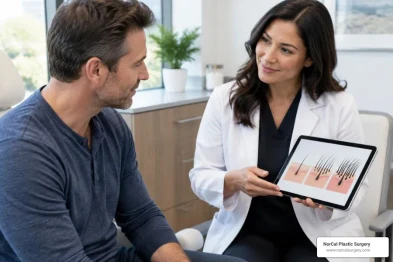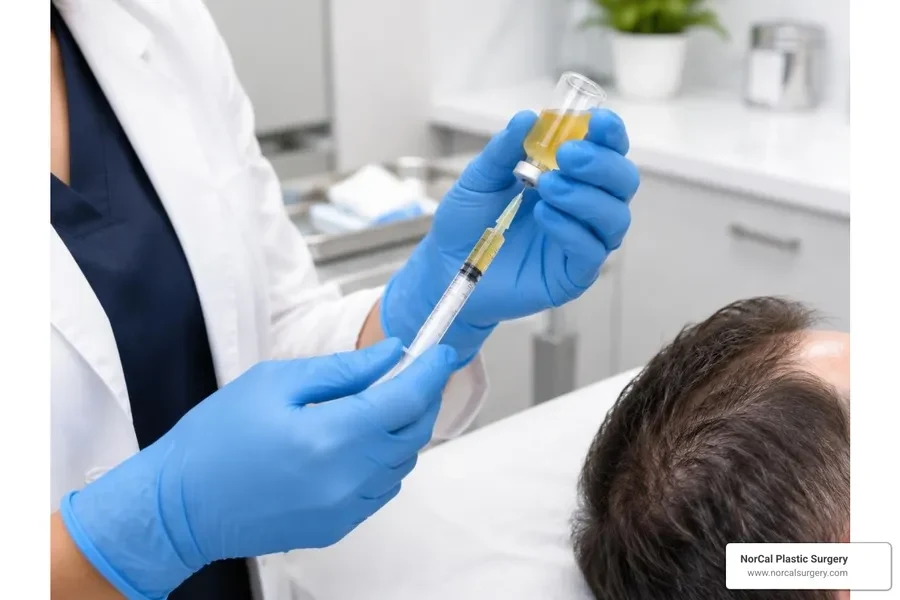
PRP hair restoration is a nonsurgical treatment that uses a concentrated preparation of your own platelets to revitalize thinning hair. The platelets are injected into the scalp, where they release growth factors that support existing hair follicles, reduce shedding, and encourage thicker, healthier hair growth over time.
The biological foundation of platelet-rich plasma rests on your body's natural healing abilities. Whole blood contains red blood cells, white blood cells, plasma, and platelets. Platelets play a vital role in clotting, but they also act as rich reservoirs of cellular growth factors and bioactive proteins.
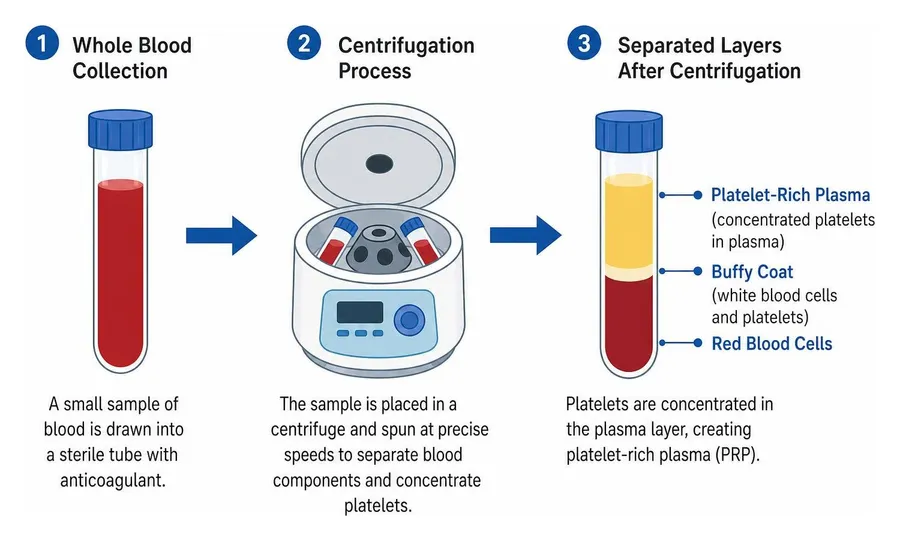
The process begins with a simple, standard blood draw. We collect a small sample of your blood, typically between 10 and 60 milliliters, into a sterile tube containing an anticoagulant. We place this sample into a specialized medical centrifuge. The machine spins the sample at precise speeds to separate red blood cells from the plasma and concentrate the platelets. This creates an autologous solution, meaning it comes entirely from your own body, with a platelet concentration significantly higher than normal baseline blood levels.
When we deliver this platelet concentrate directly into the scalp, the platelets become activated and release essential signaling proteins. These include:
- Vascular Endothelial Growth Factor (VEGF): Encourages new blood vessel formation around hair follicles, improving local nutrient and oxygen delivery.
- Platelet-Derived Growth Factor (PDGF): Stimulates cell replication, tissue remodeling, and skin regeneration.
- Epidermal Growth Factor (EGF): Promotes cell growth, tissue repair, and protective extracellular matrix creation.
- Fibroblast Growth Factor (FGF) and Transforming Growth Factor-Beta (TGF-β): Support cellular repair, tissue flexibility, and collagen framework maintenance.
- Insulin-Like Growth Factor-1 (IGF-1): Protects follicle cells from programmed death and helps maintain follicle development.
A scientific review of platelet-rich plasma mechanisms in hair regrowth highlights how these combined biological factors help prolong the anagen (active growth) phase of the hair cycle. By extending this growth window, existing follicles can produce sturdier, healthier hair shafts instead of transitioning prematurely into shedding phases (Paichitrojjana & Paichitrojjana, 2022).
Cellular Mechanisms in Follicular Regeneration
Under the surface, hair follicles rely on dynamic signaling within a specialized group of cells called the dermal papilla. In genetic hair thinning, hormonal influences cause these follicles to miniaturize over time, resulting in progressively thinner hair shafts.
PRP acts as a localized biological messenger. When injected around miniaturizing follicles, the released growth factors trigger important cellular pathways, such as the Wnt/beta-catenin and Akt pathways. These pathways promote cell survival and boost Ki-67 cellular proliferation, a primary biological marker showing that follicle cells are actively dividing.
Additionally, PRP supports neovascularization, which means building microscopic networks of new capillaries around weakened follicles. This fresh vascular supply ensures that the roots receive steady nutrition and oxygen. At the same time, the signaling factors activate anti-apoptotic pathways, helping fragile follicles resist premature decline and stay productive longer.
Candidacy for PRP Hair Restoration
PRP hair restoration works best when hair follicles are still alive and capable of responding to regenerative signals. It is ideal for individuals experiencing early to moderate hair thinning rather than complete baldness.
Good candidates typically include:
- Men and women with androgenetic alopecia: Individuals noticing widening parts, crown thinning, or early receding hairlines.
- Women with diffuse female pattern thinning: Patients experiencing overall density reduction across the top of the scalp.
- Patients with early alopecia areata: Individuals with patchy, non-scarring hair loss who want an alternative or supportive option.
- Individuals noticing stress-related or early shedding: Patients looking to strengthen existing native hair and protect vulnerable follicles.
A comprehensive scalp evaluation helps confirm whether hair follicles remain active. PRP is not appropriate for areas where the scalp is completely smooth and shiny, as those follicles have closed permanently.
Contraindications include active scalp infections, severe systemic illnesses, hemodynamic instability, active cancer, and platelet or blood clotting disorders. Individuals taking daily prescription blood thinners or high doses of systemic anti-inflammatory medications may also need alternative treatment paths.
What to Expect During PRP Hair Restoration
Undergoing a PRP treatment session is an efficient, outpatient experience designed for maximum comfort and safety. From arrival to departure, the entire appointment usually takes under an hour.
The session follows a structured clinical sequence:
- Consultation and Scalp Cleansing: We review your scalp health, document your current hair density, and cleanse the target area thoroughly with an antiseptic solution.
- Blood Collection: A member of our clinical team performs a gentle blood draw from your arm.
- Centrifugation and Separation: The blood spins in a dedicated centrifuge to concentrate the platelets while isolating clear plasma and red cells.
- Local Scalp Comfort: We apply a topical anesthetic or use local cooling methods across the treatment zone to keep you comfortable.
- Subdermal Infiltration: Using a very fine, 30-gauge needle, I place precise, micro-injections of PRP into the scalp at depths between 1.5 and 2.5 millimeters, distributing the plasma evenly among the follicles.
Downtime is minimal. You can drive yourself home immediately afterward and return to standard desk work or light daily tasks right away.
Preparation and Safety Protocols
Patient safety begins with thorough preparation. Before your appointment, we review your current medications and health history. We advise pausing non-steroidal anti-inflammatory drugs (NSAIDs) such as ibuprofen, naproxen, and aspirin for several days before and after the session, because these medications can interfere with normal platelet activation.
On the day of treatment:
- Stay well-hydrated and eat a balanced meal before your blood draw.
- Wash your hair thoroughly with a mild shampoo and avoid applying styling gels, sprays, or heavy leave-in products.
- Avoid alcohol and smoking for at least 24 hours prior to treatment to support healthy blood flow.
During the procedure, we follow strict sterile processing protocols to protect your autologous plasma from contamination. Injections are placed into the exact subdermal layer where hair roots live. After treatment, patients typically experience only mild, temporary tenderness, slight swelling, or pinpoint redness that resolves within a day or two. You may gently wash your hair the following morning using lukewarm water and a gentle cleanser.
Maximizing Results with PRP Hair Restoration
Achieving strong, long-lasting outcomes requires a consistent treatment cadence. Because hair grows in slow cycles, a single session cannot deliver complete improvement on its own.
Most clinical regimens begin with an initial series of three to four sessions spaced four weeks apart. This consistent schedule continuously provides growth factors to dormant and miniaturizing follicles during their transition into the active growth phase. Once you complete the initial series, periodic booster sessions scheduled every six to twelve months help sustain follicle health and maintain hair density.
| Treatment Consideration | Recommended Approach | Clinical Purpose |
|---|---|---|
| Initial Series | 3 to 4 sessions, spaced 4 weeks apart | Establishes follicle activation and jumpstarts growth cycles |
| Maintenance Cadence | 1 session every 6 to 12 months | Sustains follicle diameter and prevents renewed miniaturization |
| Pre-Treatment Prep | Avoid NSAIDs for 5 to 7 days before treatment | Preserves natural platelet function and signaling |
| Post-Care Cleansing | Gentle hair wash 24 hours after procedure | Keeps injection sites clean while preventing scalp irritation |
| Physical Activity | Light walking next day; pause intense workouts for 48 hours | Prevents unnecessary scalp sweating and inflammation |
| Supportive Scalp Care | Medical-grade topicals and gentle scalp handling | Provides daily environmental support for recovering follicles |
Clinical Evidence and Expected Outcomes
Scientific research on platelet-rich plasma has expanded significantly over the past decade, giving us measurable insight into how it changes hair density and thickness.
A meta-analysis of multiple clinical studies examining patients with pattern hair loss showed a clear, statistically significant increase in the number of hairs per square centimeter after PRP therapy compared to control groups (Paichitrojjana & Paichitrojjana, 2022). In a randomized, placebo-controlled clinical trial, researchers documented an average increase of 33.6 hairs in the targeted treatment zone and a mean gain in total hair density of 45.9 hairs per square centimeter compared to baseline measurements (Gentile et al., 2015).
A clinical trial analyzing PRP therapy and follicle proliferation used artificial intelligence-assisted trichoscopy alongside tissue analysis to track follicle activity. The researchers observed marked increases in Ki-67 positive cellular activity, showing that follicles were actively stimulated. Their data also revealed a clear shift in scalp composition: single hair follicles grouped together into multiple-follicle units over several months of therapy, improving visual fullness.
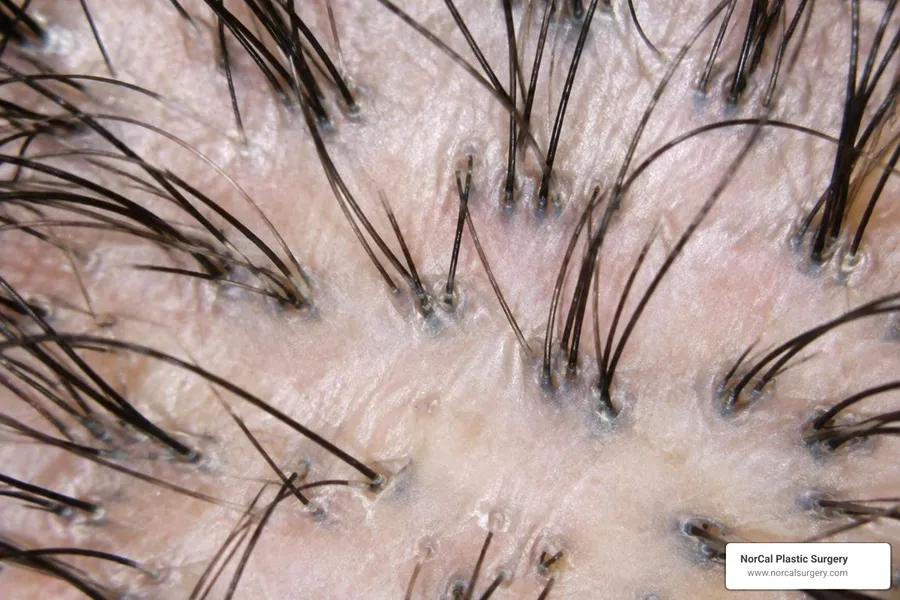
Clinical data indicates that approximately thirty to fifty out of every one hundred patients notice a visible decrease in shedding along with noticeable improvements in hair density and individual shaft diameter. Female patients frequently see meaningful improvements in hair shaft thickness across the crown, while male patients often observe improved hair counts and density across the vertex and mid-scalp.
Treatment Timeline and Maintenance
Hair restoration is a gradual process that aligns with natural biological hair growth timelines. Having realistic expectations helps you measure your progress accurately.
- Weeks 1 to 4: Follicles absorb the initial growth factors. You will not see new hair yet, but many patients notice a reduction in daily hair shedding when brushing or showering.
- Months 2 to 3: Following your second and third treatments, microscopic follicle improvement begins. Early fuzz and fine hairs start to emerge from previously dormant roots.
- Months 4 to 6: This is when visual improvements become noticeable. Hair shafts grow thicker, hair texture improves, and computerized trichoscopy reveals greater density across the treated areas.
- Months 12 and Beyond: Hair density reaches its peak from the initial series. Because androgenetic alopecia is an ongoing genetic process, scheduling routine maintenance treatments once or twice a year preserves your progress and keeps follicles active.
Comprehensive Hair Restoration Planning
PRP works exceptionally well as a primary nonsurgical option, but it is also valuable when integrated into a broader, multi-step care plan. Thinning hair is often influenced by several factors, including genetics, scalp microcirculation, hormone balance, and daily oxidative stress.
For optimal outcomes, we often combine PRP treatments with evidence-based topical treatments, targeted oral therapies, nutritional support, or low-level light therapy. Providing comprehensive scalp support ensures that your revitalized follicles receive the ongoing biological signals and nutrients required for lasting hair density.
Frequently Asked Questions About PRP Hair Therapy
How many sessions are typically required to see results?
Most patients start with an initial foundation of three to four treatment sessions, spaced four weeks apart. Because hair follicles cycle slowly through rest and growth phases, multiple treatments ensure that follicles in various stages receive growth factor exposure.
Initial improvements in hair retention and reduced shedding often appear around the two-month mark, with noticeable gains in hair thickness and density becoming visible between four and six months. To maintain these improvements over time, we recommend scheduling a single booster session every six to twelve months.
Is PRP hair therapy painful or associated with downtime?
Discomfort during PRP injections is minimal and brief. We apply topical numbing agents, local cooling, or precise nerve blocks across the scalp before starting to keep you comfortable. Most patients describe the injections as light pressure or brief pinching sensations.
There is virtually no downtime. You can resume driving, desk work, and standard daily routines right after your appointment. We simply advise holding off on intense, sweat-heavy workouts, saunas, and hot tubs for about 48 hours to avoid scalp irritation.
How does PRP compare to other hair restoration approaches?
PRP is a non-surgical, autologous therapy that uses your own biological material, eliminating risks of foreign-body or allergic reactions. It is specifically designed to revitalize existing, weakened follicles in areas of early to moderate thinning.
Unlike daily topical solutions or synthetic treatments that require continuous daily application to maintain temporary effects, PRP delivers concentrated biological growth factors directly to the follicle roots. This jumpstarts your body's natural cellular repair mechanisms to strengthen thinning hair, preserve native follicles, and improve overall hair quality from within.
Conclusion
Hair thinning can feel frustrating, but modern regenerative medicine offers dependable, natural methods to help preserve and revitalize your hair. By harnessing the concentrated growth factors in your own platelets, PRP therapy directly nourishes tired follicles, curbs unwanted shedding, and supports thicker hair growth over time.
At NorCal Plastic Surgery, with locations across the Bay Area, including Walnut Creek and our fully accredited surgical facility in Tiburon, we believe that successful aesthetic care begins with a customized, medically guided plan. Whether you are exploring nonsurgical hair restoration or interested in advanced aesthetic injectables and regenerative treatments, my team and I provide attentive, personalized care designed to deliver natural, enduring results.
If you are noticing early signs of thinning and want to learn how regenerative hair restoration can support you, reach out to our team at NorCal Plastic Surgery to schedule your personal consultation.
References
Gentile P, Garcovich S, Bielli A, Scioli MG, Orlandi A, Cervelli V. "The Effect of Platelet-Rich Plasma in Hair Regrowth: A Randomized Placebo-Controlled Trial.." Stem cells translational medicine, 2015. PMCID PMC4622412. Paichitrojjana A, Paichitrojjana A. "Platelet Rich Plasma and Its Use in Hair Regrowth: A Review.." Drug design, development and therapy, 2022. PMCID PMC8922312.