
If you are looking for the best sagging skin treatment, the right option depends on where the laxity appears, how much loose skin is present, and whether you want a non-surgical or surgical approach.
| Treatment | Best For | Typical Results Timeline | Downtime |
|---|---|---|---|
| Microfocused ultrasound | Mild facial or neck laxity | Gradual over several months | Usually none |
| Radiofrequency | Mild to moderate laxity on the face or body | Gradual over several months | Minimal to none |
| RF microneedling | Texture concerns with mild laxity | Gradual over several weeks to months | A few days of redness is common |
| Laser resurfacing | Surface texture, fine lines, and selected tightening goals | Healing begins within weeks | Varies by laser treatment |
| Facelift, neck lift, or body contouring | More pronounced laxity or excess skin | Visible after recovery | Weeks |
| Medical-grade skin care | Maintenance and mild texture concerns | Gradual with consistent use | None |
You may notice that your cheeks, jawline, neck, arms, abdomen, or thighs no longer look as firm as they once did. Skin laxity is common with age, pregnancy, weight changes, and sun exposure.
The good news is that surgery is not the only option. Ultrasound, radiofrequency, laser treatments, and medical-grade skin care can help selected patients improve skin quality and mild to moderate laxity with limited downtime. When laxity is more pronounced, surgery may provide the most meaningful improvement.
This guide compares leading options, including expected recovery, longevity, and the concerns each treatment can address. A consultation is still essential because the best plan is based on your anatomy, skin quality, and goals.
I am Dr. Timothy Rankin, a board-certified plastic surgeon and Fellow of the American College of Surgeons. At NorCal Plastic Surgery, I help patients across the SF Bay Area choose facial rejuvenation and body contouring options designed for natural-looking, individualized results.

What Causes Skin Laxity and Who Is at Risk?
Skin stays firm because collagen provides structure and elastin helps it stretch and rebound. With time, the body produces less of these supportive proteins and existing fibers can become less resilient. This can contribute to fine lines, crepey texture, and a softer or looser appearance.
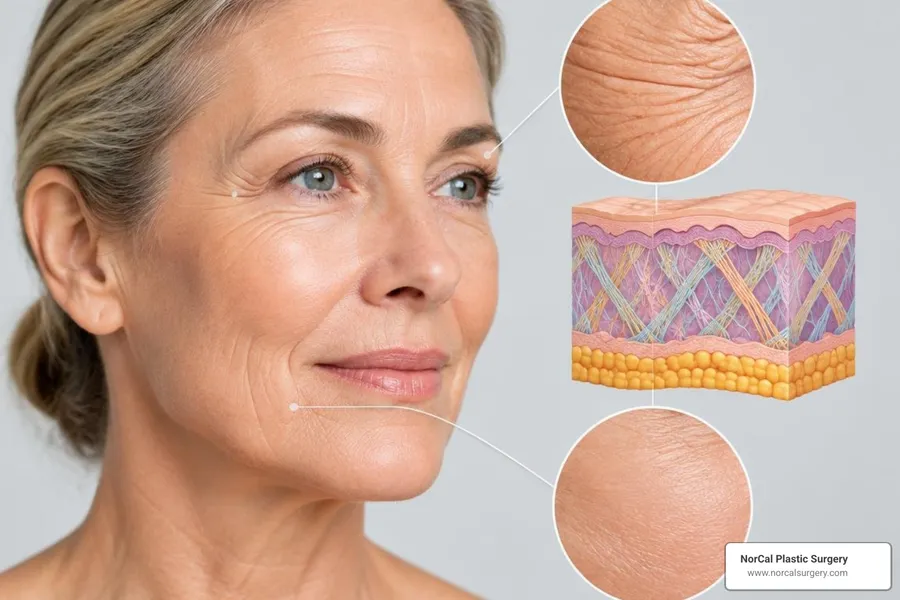
Several factors can make these changes more noticeable:
- Sun exposure: Ultraviolet exposure can accelerate visible signs of skin aging. Daily sun protection is one of the most important ways to support skin health.
- Weight changes: After substantial or rapid weight loss, the skin may not fully contract to match a smaller body contour. Facial volume loss can also make laxity more apparent.
- Pregnancy: Stretching of the abdominal skin and changes in the abdominal wall can affect the way the midsection looks after pregnancy.
- Smoking and environmental exposure: Smoking and chronic environmental stress can affect skin quality and the body’s repair processes.
- Genetics and overall health: Skin thickness, elasticity, hormonal changes, and individual healing patterns all influence how skin ages.
Understanding the cause and location of laxity helps determine whether skin care, energy-based treatment, injectable treatment, surgery, or a combination of approaches is most appropriate.
The Best Sagging Skin Treatment Options Compared
Patients visiting our Tiburon, Walnut Creek, and East Bay locations often ask how non-surgical tightening compares with a surgical lift. The answer starts with the degree of laxity and the result you hope to achieve.
Non-surgical options can be useful for mild to moderate laxity. They generally create gradual changes and require little recovery time. They cannot remove excess skin or reposition deeper facial and body structures the way surgery can.
Here is a practical way to compare the options:
- Non-invasive treatments, including ultrasound and radiofrequency: These treatments usually require little or no downtime. Results develop gradually as the skin responds to treatment, and maintenance may be recommended.
- Minimally invasive treatments, including RF microneedling and selected subdermal radiofrequency procedures: These may involve numbing medicine and a short recovery period with temporary redness, swelling, or tenderness. They can address skin texture as well as mild laxity.
- Surgical procedures, including facelift, neck lift, tummy tuck, breast lift, arm lift, and thigh lift: Surgery can remove excess skin and, when appropriate, address underlying tissues. Recovery is longer, but surgery is often the clearest option for patients with more pronounced laxity.
Cost, recovery, safety, and expected longevity vary by treatment area, device, provider, and patient factors. A thorough consultation is the best way to determine which approach is appropriate for you.
Non-Invasive and Minimally Invasive Tightening Technologies
For patients who are not ready for surgery, several treatments can support collagen remodeling and improve skin quality. These options use controlled energy or targeted treatment to encourage the body’s natural repair response. They are most appropriate when there is mild to moderate laxity and realistic expectations about the degree of change possible.
Microfocused Ultrasound for Deep Facial and Neck Tightening
Microfocused ultrasound delivers focused sound-wave energy beneath the skin’s surface. It is commonly used for selected patients seeking gradual tightening of the brow, jawline, lower face, or neck without an incision.
The treatment does not replace a facelift. It may be a reasonable option for early laxity, while patients with heavier tissue descent or significant excess skin may benefit more from a surgical consultation. Results develop gradually, and the degree of improvement varies by patient.
Radiofrequency Therapy and Subdermal Heat Treatments
Radiofrequency uses heat to treat targeted layers of the skin. Depending on the device and technique, it may be used on the face, neck, abdomen, arms, thighs, or other areas of concern.
- Non-invasive RF: Surface-applied radiofrequency can be considered for mild laxity and for patients who prefer little to no downtime.
- RF microneedling: This treatment pairs microneedling with radiofrequency energy and may improve skin texture, acne scarring, fine lines, and mild laxity. Temporary redness and swelling are common after treatment.
- Subdermal radiofrequency: In some cases, a small cannula is placed beneath the skin to deliver controlled heat to deeper tissue. This approach is more invasive than surface treatments and should be discussed carefully with a qualified provider.
Laser Resurfacing and Red-Light Therapy
Laser resurfacing can improve texture, fine lines, sun-related damage, and selected tightening concerns. Different laser settings involve different recovery periods, so the right choice depends on your skin type, goals, and tolerance for downtime.
At-home red-light devices may be used as part of a skin-care routine, but they should not be presented as a substitute for a professional evaluation or a surgical procedure when excess skin is the main concern. Ask your provider whether an at-home device is appropriate for your treatment plan.
Medical-Grade Skin Care as a Supportive Treatment
No topical product can remove excess skin or create the structural change of a facelift, neck lift, or body-contouring procedure. However, consistent skin care can support skin quality and help maintain results from in-office treatment.
Common ingredients to discuss with a qualified clinician include retinoids, antioxidants, peptides, moisturizers, and broad-spectrum sunscreen. Oral collagen supplements may be of interest to some patients, but results can vary and supplements should not replace a balanced diet, sun protection, or appropriate medical care.
Frequently Asked Questions About Skin Tightening
Who is the ideal candidate for non-surgical skin tightening?
The best candidates usually have mild to moderate laxity, good overall health, and realistic expectations. Skin type, medical history, treatment area, and the device being considered all matter. A qualified provider can help determine whether an energy-based treatment is appropriate and whether a surgical option would better match your goals.
How long do results from non-surgical treatments last?
Results and longevity vary by treatment, area, skin quality, and lifestyle. Many patients choose periodic maintenance treatments. Daily sun protection and a consistent skin-care routine can help support the appearance of the skin over time.
When is surgical body contouring or a facelift necessary?
Surgery may be the most effective choice when there is pronounced skin laxity, visible jowling, neck skin excess, or loose skin after pregnancy or substantial weight loss. Procedures such as a facelift, tummy tuck, breast lift, arm lift, or thigh lift can remove excess skin and improve contour in ways that non-surgical devices cannot.
To learn more, explore our surgical procedures and discuss your goals during a personalized consultation.
Conclusion
Finding the best sagging skin treatment is not a one-size-fits-all decision. Whether laxity is related to natural aging, pregnancy, or weight changes, the best plan should match your anatomy, skin quality, goals, and preferred recovery time.
NorCal Plastic Surgery offers individualized surgical and non-surgical treatment planning for patients throughout the SF Bay Area, including Tiburon, Walnut Creek, the East Bay, and Marin County. Dr. Timothy Rankin and our team focus on natural-looking results and clear guidance about what each option can realistically achieve.
Ready to explore your options? Schedule a consultation for facial rejuvenation with our team today.