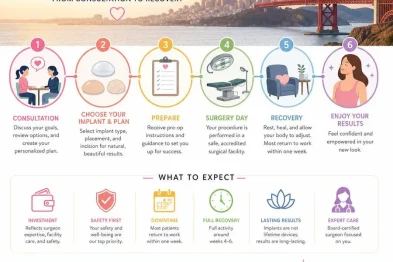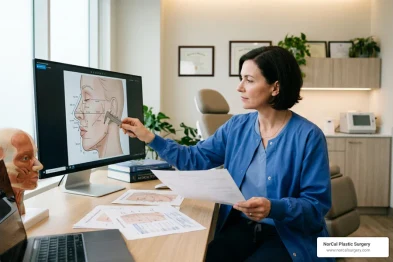
A thoughtful breast augmentation plan begins with a consultation that centers on your goals, anatomy, and lifestyle. Bring reference photos if they help you explain the look you prefer, then discuss implant type, size range, placement, incision options, and the recovery support you will need.
Use the visit to learn how the surgeon approaches breast procedures and whether the surgical facility, anesthesia team, and follow-up process align with your expectations. The American Society of Plastic Surgeons also offers helpful patient education as you prepare for a consultation.
Dr. Timothy Rankin is a board-certified plastic surgeon with advanced breast-surgery training from his plastic surgery residency at Vanderbilt University. This guide explains how Bay Area patients can prepare for breast augmentation and make confident, well-informed choices.
Choosing the Right Breast Augmentation Plan
Breast augmentation should be tailored to your body and the result you hope to achieve. Your consultation is the place to discuss the qualities that matter most to you, such as a subtle or fuller look, upper-pole fullness, cleavage, symmetry, and how your result may fit your everyday activities.
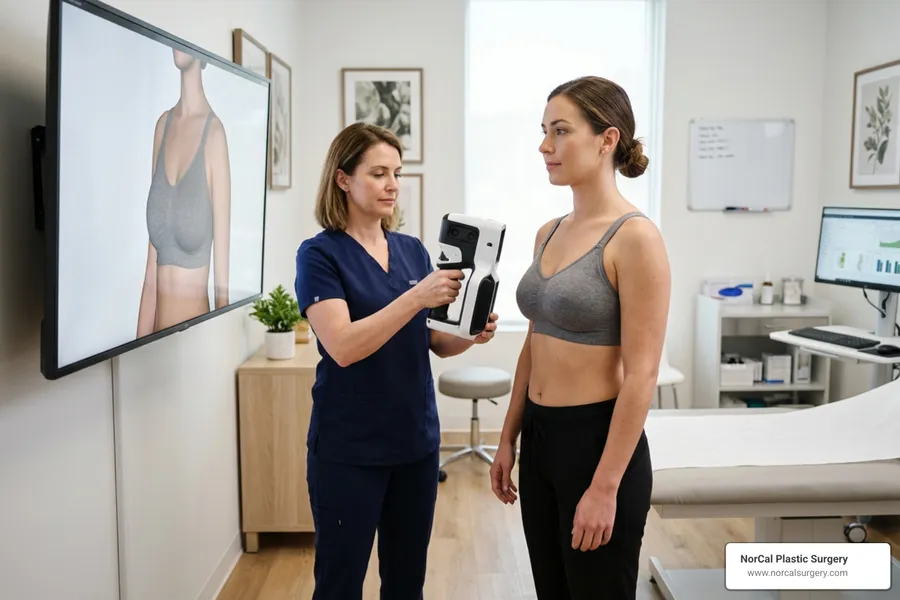
During consultation, Dr. Rankin uses advanced 3D imaging to help patients explore implant profiles and projections on their own frame. While imaging is a planning tool rather than a guarantee, it can make conversations about proportion and shape much clearer.
Your Goals and Anatomy
A personalized plan considers more than cup size. Important details include your chest width, existing breast tissue, skin quality, nipple position, and the way your body naturally carries volume. These factors help guide an implant range and placement approach that support a balanced, natural-looking result.
Your goals are equally important. Some patients want modest enhancement that looks at home in fitted clothing, while others want more noticeable fullness. The best plan is the one that respects both your anatomy and your vision.
Selecting a Bay Area Surgical Setting
Look for a plastic surgeon certified by the American Board of Plastic Surgery who performs breast augmentation in an accredited surgical setting. You should feel comfortable asking about the surgeon's experience, the anesthesia team, pre-operative preparation, and the follow-up schedule.
At NorCal Plastic Surgery, patients can meet with the team in Tiburon or Walnut Creek. Procedures are performed in the fully accredited Tiburon surgical facility, with a consistent focus on safety, privacy, and attentive care.
Implant Choices and Surgical Techniques
Every breast augmentation plan involves choices about implant material, profile, placement, and incision location. A consultation provides the opportunity to review how each option may fit your body and goals.
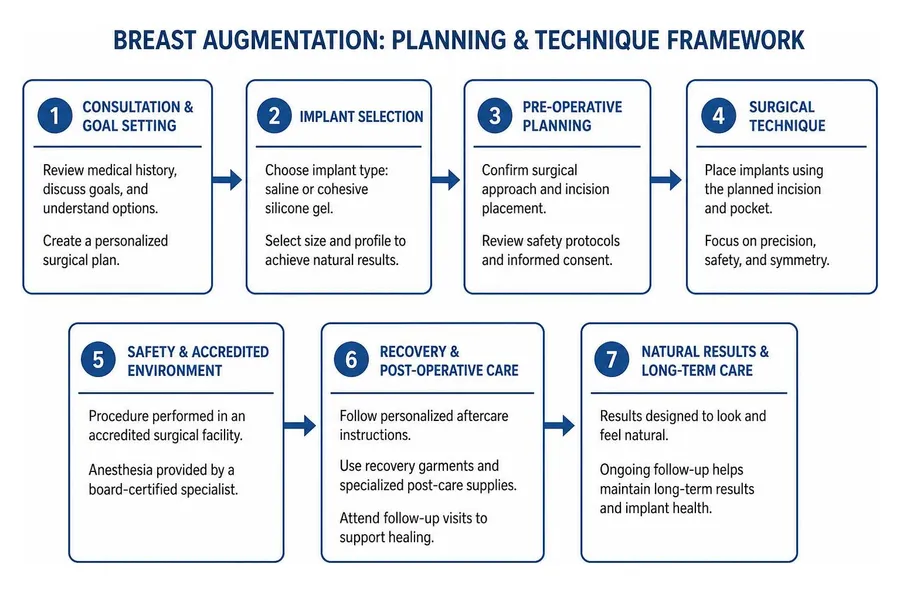
Implant Types: Saline and Cohesive Silicone Gel
Saline implants have a silicone shell that is filled with sterile salt water during surgery. They may be a good fit for patients who prefer this option or who want the flexibility of a smaller incision in certain situations.
Cohesive silicone gel implants are designed to hold their shape while offering a soft, natural feel. Many patients with thinner breast tissue appreciate the added softness and contour these implants can provide.
Neither option is automatically right for everyone. A consultation should cover the feel, shape, incision considerations, and expected appearance of each choice so patients can decide with clarity.
Placement, Incisions, and Combination Procedures
Implants may be placed above or partially beneath the chest muscle, depending on your anatomy and desired result. Dual-plane placement can provide additional soft-tissue coverage for some patients, while other approaches may be more appropriate for different body types.
Incision placement is also individualized. The surgeon considers factors such as implant choice, breast shape, skin quality, and the visibility of a future scar.
If pregnancy, weight changes, or natural aging have changed breast position or skin laxity, a breast lift may be considered alongside augmentation. Combining procedures can address both volume and shape in one carefully planned operation.
Preparing for Surgery and Recovery
Good preparation helps make the surgical experience smoother and gives you a clear plan for the first weeks of healing. Your care team will provide individualized pre-operative instructions, including guidance about medications, supplements, meals, transportation, and arranging help at home.

What to Expect From Your Care Plan
Your plan should outline the steps before and after surgery, including:
- Pre-operative preparation: A review of your health history, surgical plan, and instructions for the days before your procedure.
- Accredited surgical facility: A setting with established safety, sterilization, and monitoring standards.
- Anesthesia care: A dedicated anesthesia professional who monitors you throughout the procedure.
- Recovery support: Surgical garments, incision-care guidance, and clear instructions for rest and activity.
- Follow-up visits: Appointments to review healing, answer questions, and guide your return to normal routines.
Recovery and Long-Term Follow-Up
Most patients need time away from strenuous activity while swelling settles and the implants begin to soften into position. Early recovery is focused on rest, light walking, hydration, and following your specific instructions.
Breast implants are not considered lifetime devices, so long-term follow-up remains an important part of care. Regular communication with your plastic surgeon helps you protect your results and address questions as your needs change over time.
Frequently Asked Questions About Breast Augmentation
How do I choose an implant size?
Rather than selecting a size from a number alone, consider your frame, existing breast tissue, clothing preferences, and the look you want to achieve. Implant sizers and 3D imaging can help you compare options during your consultation.
What is the typical recovery timeline after surgery?
Recovery is gradual and individualized. During the first few days, plan to rest and wear your support garments as instructed. Many patients return to light daily activities after the initial recovery period, while exercise and more demanding activity resume only after surgeon clearance.
Your follow-up visits are an important part of the process. They allow your surgeon to monitor healing and give you clear guidance as you return to your routine.
How can I choose the right plastic surgeon?
Prioritize credentials, experience with breast procedures, a thoughtful consultation process, and an accredited surgical setting. Review before-and-after photos to see whether the surgeon's aesthetic approach matches your goals. You should also leave the consultation feeling heard, respected, and clear about the next steps.
Conclusion
Breast augmentation is a personal decision, and the right plan is built around your goals, anatomy, and comfort with the process. A detailed consultation can help you understand your options and choose an approach that supports a balanced, natural-looking result.
To discuss implant options, 3D imaging, and a personalized surgical plan, schedule a private consultation with NorCal Plastic Surgery today.