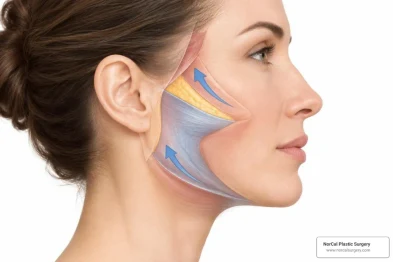
When planning a facelift, understanding the anatomical layers of the face is key to achieving natural results. Early surgical techniques in the 20th century focused almost entirely on pulling and trimming the skin. However, modern plastic surgery focuses on the underlying structural support systems to create long-lasting, natural rejuvenation without a pulled or windblown appearance. You can read a complete facelift clinical overview to learn more about how surgical care has evolved over time.
Structural Anatomy and Signs of Aging
To understand how a facelift restores balance, it helps to look at the facial structures beneath the surface:
- The Skin: As time passes, collagen and elastin production naturally decline. Thinning skin loses its bounce and structural firmness, leading to surface folds and sagging.
- Subcutaneous Fat: Youthful faces feature plump, nicely positioned fat pads over the cheekbones. With age, gravity and volume shifts cause these fat pads to descend toward the mouth and jawline.
- The SMAS (Superficial Musculoaponeurotic System): Located beneath the subcutaneous fat, this fibromuscular layer connects facial muscles to the skin. Securing and elevating the SMAS layer is the true foundation of modern facial rejuvenation.
- Platysma Muscle: In the neck, the platysma muscle can separate and weaken, causing vertical banding, sagging neck skin, and loss of jawline crispness.
When these structural layers shift downward, several characteristic signs of facial aging develop:
- Jowl Formation: Sagging cheek fat and relaxed SMAS tissue spill over the border of the mandible, obscuring a crisp jawline.
- Midface Descent: Cheek volume flattens out, deepening the nasolabial folds running from the nostrils to the corners of the mouth.
- Marionette Lines and Oral Commissures: Downward volume shifts accentuate vertical creases below the corners of the mouth, often creating a perpetually tired expression.
- Neck Laxity: Loose platysma muscle bands and excess skin create a double chin appearance or a turkey gobbler neck, softening the cervicomental angle (the transition where the chin meets the neck, ideally between 90 and 105 degrees).
What a Facelift Cannot Correct
While a facelift is the gold standard for repositioning sagged deeper tissue, it has distinct boundaries:
- Fine Lines and Surface Wrinkles: Crepey skin texture, crow's feet around the eyes, and vertical lip lines (smoker's lines) are superficial skin changes that require surface-level therapies.
- Sun Damage and Discoloration: Age spots, hyperpigmentation, and visible capillaries cannot be removed simply by lifting underlying facial layers.
- The Aging Process Itself: Surgery resets the clock, but it does not stop time. Bone resorption, soft tissue atrophy, and skin changes continue naturally.
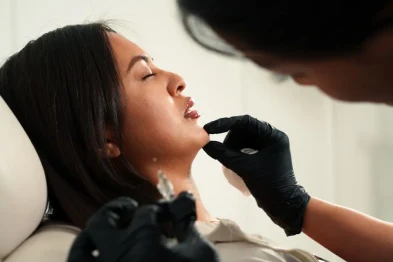
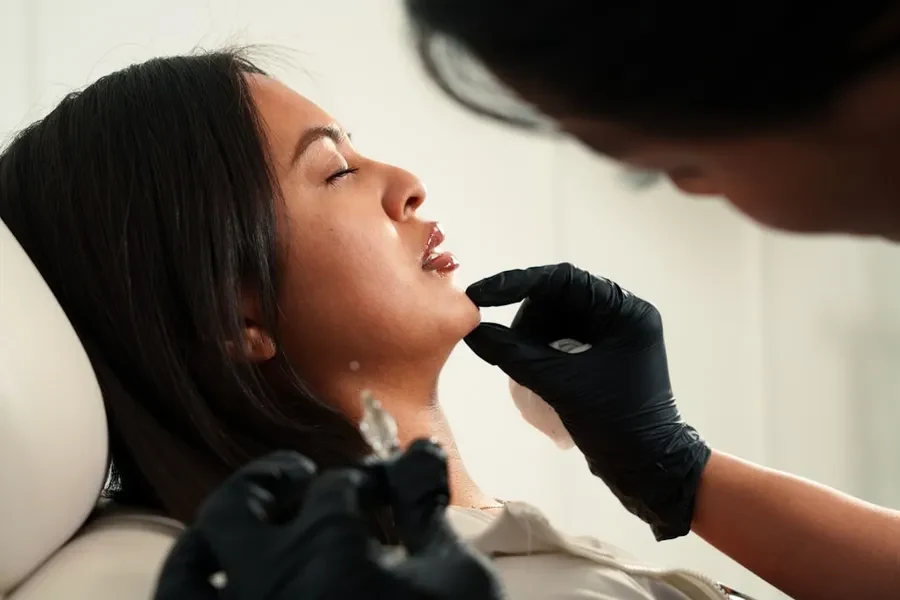
For optimal, balanced facial harmony, patients frequently combine surgical lifting with non-surgical medspa therapies. You can find more info about facial medspa treatments on our dedicated service pages.
Surgical Techniques and Procedure Variations
No single surgical approach fits every face. During your consultation at NorCal Plastic Surgery, your surgeon evaluates facial bone structure, skin quality, tissue thickness, and degree of laxity to select an approach that matches your aesthetic goals.
Deep Plane vs. SMAS Facelift Techniques
Two advanced facial lifting techniques are the SMAS lift and the deep plane facelift. Both elevate deeper structural tissue rather than placing tension on the skin alone, but their dissection planes differ.
- SMAS Facelift (Plication or Imbrication): In a traditional SMAS procedure, the surgeon elevates the skin flap and then lifts, tightens, folds (plicating), or trims and reattaches (imbricating) the underlying SMAS layer. This pulls deep facial structures upward and backward to restore high cheek contours and sharpen the jawline.
- Deep Plane Facelift: In a deep plane facelift, the skin and SMAS layer are not separated in the midface. Instead, the surgeon enters a deeper plane beneath the SMAS to release fixed facial retaining ligaments, such as the zygomaticocutaneous and mandibular ligaments. Releasing these ligaments allows the cheek fat pad, midface tissue, and SMAS layer to be elevated together as a single, stress-free unit. This can provide elevation for pronounced nasolabial folds and jowling.
Medical research detailed in cervicofacial rhytidectomy research highlights how surgical choices depend on unique anatomical features, tissue laxity, and patient health history.
Mini-Lift and Short-Incision Approaches
For patients with mild-to-moderate lower-face laxity, a full deep-plane dissection may not be necessary.
- Mini-Facelift: This approach uses smaller incisions, usually concealed around the front of the earlobe. It focuses primarily on early jowling and restoring jawline definition with less tissue dissection.
Limited-incision approaches can offer shorter procedure times and quicker initial recoveries when they are clinically appropriate.
Surgical Intervention vs. Non-Surgical Rejuvenation
Many Bay Area patients wonder whether injectable treatments, lasers, or thread lifts can replace a surgical facelift. While non-surgical options can support maintenance goals, they address different structural concerns.
Non-surgical energy devices, dermal fillers, and neurotoxins can temporarily restore surface volume and relax dynamic wrinkles. Some patients seeking broader aesthetic refresh plans may also ask about non-surgical options. The phrase "non-surgical mommy makeover" is shorthand for a customized combination of non-surgical body contouring, skin tightening, injectables, medspa, or wellness treatments. It is not equivalent to a surgical mommy makeover or a surgical facial procedure.
| Treatment Feature | Surgical Facelift (Rhytidectomy) | Non-Surgical Rejuvenation (Fillers, Lasers, Energy Devices) |
|---|---|---|
| Primary Mechanism | Repositions deep SMAS tissue, releases ligaments, removes excess skin | Fills surface volume loss, relaxes active muscle movement, stimulates surface skin collagen |
| Targeted Concerns | Moderate to severe jowls, deep folds, neck laxity, sagging midface | Fine wrinkles, minor volume loss, uneven texture, mild surface skin looseness |
| Surgical Incisions | Yes, concealed along the hairline and natural ear contours | None, using injections, light-based treatments, or microneedling |
| Anesthesia Level | General anesthesia or IV conscious sedation | Topical numbing cream or local anesthetic blocks |
| Average Downtime | About 10 to 14 days for public activities; 2 to 3 weeks for a fuller return to work | Minimal to none, often a few days of localized redness or swelling |
| Duration of Results | Often 7 to 10 or more years | Usually requires ongoing maintenance sessions |
Candidacy, Surgical Preparation, and Procedure Details
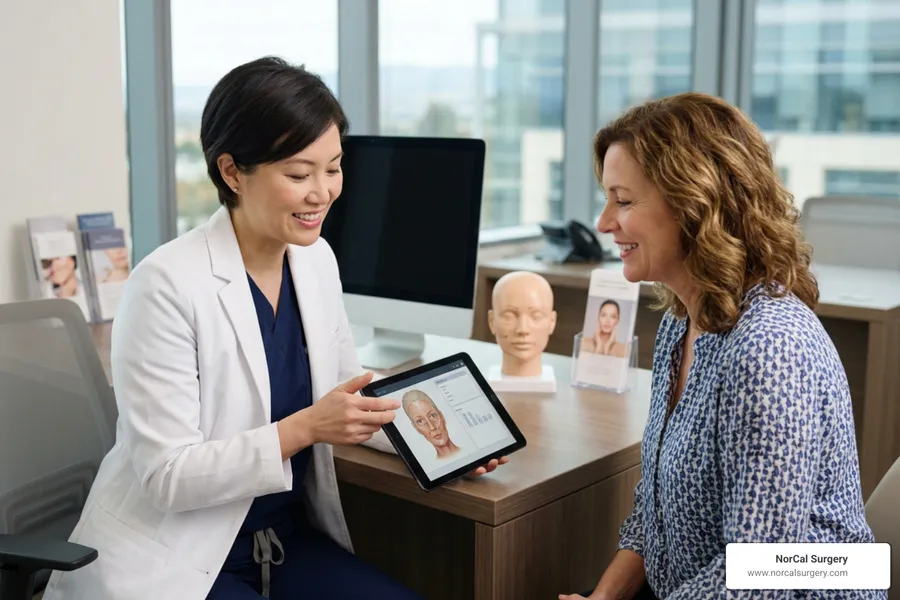
A successful cosmetic outcome relies heavily on selecting the right candidate and preparing carefully before stepping into the operating room.
Ideal Candidates and Medical Contraindications
An ideal candidate for a facelift generally meets the following criteria:
- Good Skin Elasticity: While skin may sag, having residual elasticity helps it redrape smoothly over newly restored deeper contours.
- Defined Bone Structure: Strong cheekbones and a distinct jawline provide an ideal framework to support lifted facial tissue.
- Realistic Expectations: Understanding that surgery resets your biological clock without freezing time completely.
- Overall Medical Fitness: Being in stable physical health drastically reduces surgical and anesthetic risks.
Key Medical Contraindications and Safety Risks:
- Active Nicotine Use: Smoking or vaping nicotine severely restricts microvascular blood supply to healing facial skin flaps. Nicotine exposure dramatically increases the risk of delayed wound healing, skin tissue necrosis (skin loss), and raised, thick scarring. Patients must completely abstain from all nicotine products for at least 4 to 6 weeks before and after surgery.
- Uncontrolled High Blood Pressure: Elevated intraoperative or postoperative blood pressure (systolic BP > 120-130 mmHg) is the primary trigger for postoperative hematoma formation. Hypertension must be strictly controlled with medication before clearing a patient for surgery.
- Bleeding Disorders or Anticoagulant Therapy: Conditions that impair blood clotting, or taking blood-thinning medications, increase bleeding risks during and after surgery.
Preoperative Protocol and Surgical Steps
Preparing for surgery involves a clear, structured sequence designed to maximize safety and peace of mind:
- Medication Audit: Three weeks prior to your surgery, under medical direction, stop taking blood-thinning over-the-counter medications and supplements such as aspirin, ibuprofen, naproxen, vitamin E, fish oil, ginkgo biloba, and ginseng.
- Medical Clearance: A thorough health evaluation, blood work, and an EKG (when indicated) ensure your body is ready for anesthesia.
- The Morning of Surgery: Patients wash their face and hair with a germicidal, antibacterial soap and fast after midnight to prepare for anesthesia.
What Happens During the Surgical Procedure:
- Anesthesia: Performed comfortably under general anesthesia or intravenous conscious sedation administered by board-certified anesthesia professionals.
- Incision Placement: Incisions are carefully hidden along natural skin creases. A standard incision starts in the hairline at the temple, runs down along the natural curve in front of the ear (or just inside the tragus), loops around the earlobe, and extends into the lower scalp behind the ear. If neck work is performed, a tiny, discrete incision is placed under the chin.
- Deep Tissue Elevation: The surgeon lifts the skin flap, attaches sutures to elevate and secure the SMAS fascia and underlying fat pads, and tightens sagging platysma muscle bands in the neck.
- Redraping and Closure: The skin is gently redraped over the newly contoured deep foundation without tension. Excess skin is trimmed away, and incisions are meticulously closed with fine aesthetic sutures and clips. Small temporary drainage tubes may be placed behind the ears to prevent fluid accumulation.
Recovery, Risk Management, and Result Longevity

Knowing what to expect during recovery helps ensure a comfortable, safe healing journey.
Postoperative Timeline and Care Guidelines
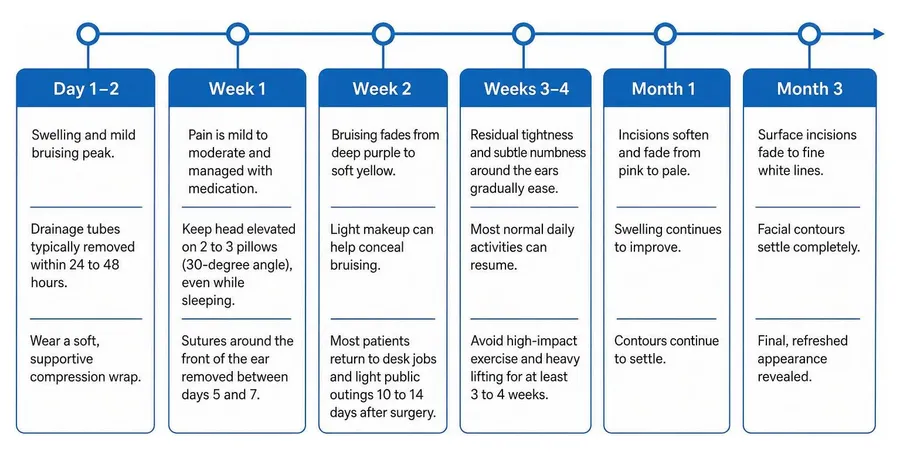
Every patient heals at their own pace, but a standard recovery timeline generally follows these steps:
- Days 1 to 2: Swelling and mild bruising peak during the first 48 hours. Any small drainage tubes are typically removed in our office within 24 to 48 hours. You will wear a soft, supportive facial compression wrap to reduce fluid build-up.
- Week 1: Pain is generally mild to moderate and managed easily with prescribed pain medications. Keep your head elevated on 2 to 3 pillows (at a 30-degree angle) even while sleeping to speed up swelling reduction. Sutures around the front of the ear are usually removed between days 5 and 7.
- Week 2: Bruising fades from deep purple to soft yellow and can often be concealed with light makeup. Most patients feel comfortable returning to desk jobs and light public outings 10 to 14 days after surgery.
- Weeks 3 to 4: Residual tightness and subtle numbness around the ears gradually ease. Most normal daily activities can be resumed, though high-impact, strenuous cardiovascular exercise and heavy lifting must be avoided for at least 3 to 4 weeks.
- Months 1 to 3: Surface incisions soften and fade from pink to fine white lines. Facial contours settle completely, revealing your final, refreshed appearance.
Potential Surgical Risks and Result Longevity
While a facelift is a safe procedure when performed by an experienced plastic surgeon, every surgical operation carries potential risks:
- Hematoma: A collection of blood beneath the skin flap is the single most common complication following rhytidectomy, occurring in approximately 0.2% to 8% of cases. Most hematomas develop within the first 24 hours post-surgery and require prompt evaluation by your surgeon to relieve pressure and preserve skin flap health.
- Nerve Injury: The overall reported incidence of nerve injury ranges from 0.7% to 2.5%. Sensory nerve irritation (such as temporary numbness along the earlobe caused by the great auricular nerve) is relatively common and usually resolves over several months. Temporary motor nerve weakness affecting facial expression is far less common and typically recovers on its own as tissue inflammation calms down.
- Delayed Healing and Skin Necrosis: Most often seen in active smokers or patients with poor peripheral circulation.
- Postoperative Depression: It is surprisingly common for up to 30% of patients to experience temporary blues or emotional fatigue during the first week after surgery as swelling peaks and activities are restricted. Rest assured that this feeling passes quickly as visible healing progresses!
How Long Do Results Last?
A custom, deep-tissue surgical facelift typically delivers enduring cosmetic benefits lasting 7 to 10 years or more. Factors that influence how well your results age over time include:
- Sun Protection: Daily application of broad-spectrum SPF 30+ sunscreen preserves skin collagen and prevents pigmentation changes along surgical scars.
- Weight Stability: Significant weight gains or losses stretch and deflate facial skin, altering surgical outcomes.
- Lifestyle Choices: Avoiding nicotine, eating a nutrient-rich diet, staying hydrated, and maintaining a solid skin care routine ensure your rejuvenated contours remain vibrant for years to come.
Frequently Asked Questions
How long does downtime typically last after surgery?
Most patients take 2 to 3 weeks off from work and public social commitments after a full facial lift. If you undergo a less invasive procedure, like a mini-facelift, downtime is usually shorter, with many returning to normal routines in 5 to 7 days. Most residual swelling and bruising settle significantly within the first 14 days.
Is the procedure painful during recovery?
Surprisingly, most patients describe recovery from a facelift as involving mild discomfort or tightness rather than sharp pain. The deep tissue manipulation causes a feeling of fullness around the neck and jaw. Any post-operative discomfort is easily controlled during the first few days using prescribed pain medications, followed by mild over-the-counter options as recommended by your surgical team.
At what age should someone consider surgery?
There is no single magic age for a facelift. Most patients undergo their first procedure in their 40s, 50s, or 60s, when skin laxity and jowling become noticeable. Performing surgery when skin still retains reasonable elasticity allows for beautiful, long-lasting outcomes. Some patients choose to get an initial facelift in their late 40s or early 50s and elect to get a subtle update procedure 10 to 15 years later.
Conclusion
A successful facelift is an art form rooted in surgical precision. By elevating deeper structural tissue and redraping skin naturally, modern rhytidectomy creates a refreshed, authentic version of yourself without altering your distinct facial identity.
At NorCal Surgery, our award-winning, board-certified plastic surgeon, Dr. Timothy Rankin, designs personalized facial surgery plans tailored to your unique anatomy and aesthetic vision across our Bay Area locations. Ready to discover what modern facial rejuvenation can do for your confidence? Explore personalized facial surgery options and schedule your private consultation with our team today!